
Four Autistic-Friendly Activities to Nurture Balance
Autistic Burnout Recovery in Practice


Done with overload, burnout, and utter exhaustion?
Try these four practical activities that you can do on your own to nurture your autistic body, mind, and spirit into balance. Why? Balance is the way through Chronic Autistic Burnout. Read on and choose one experiment to try this week👇🏽
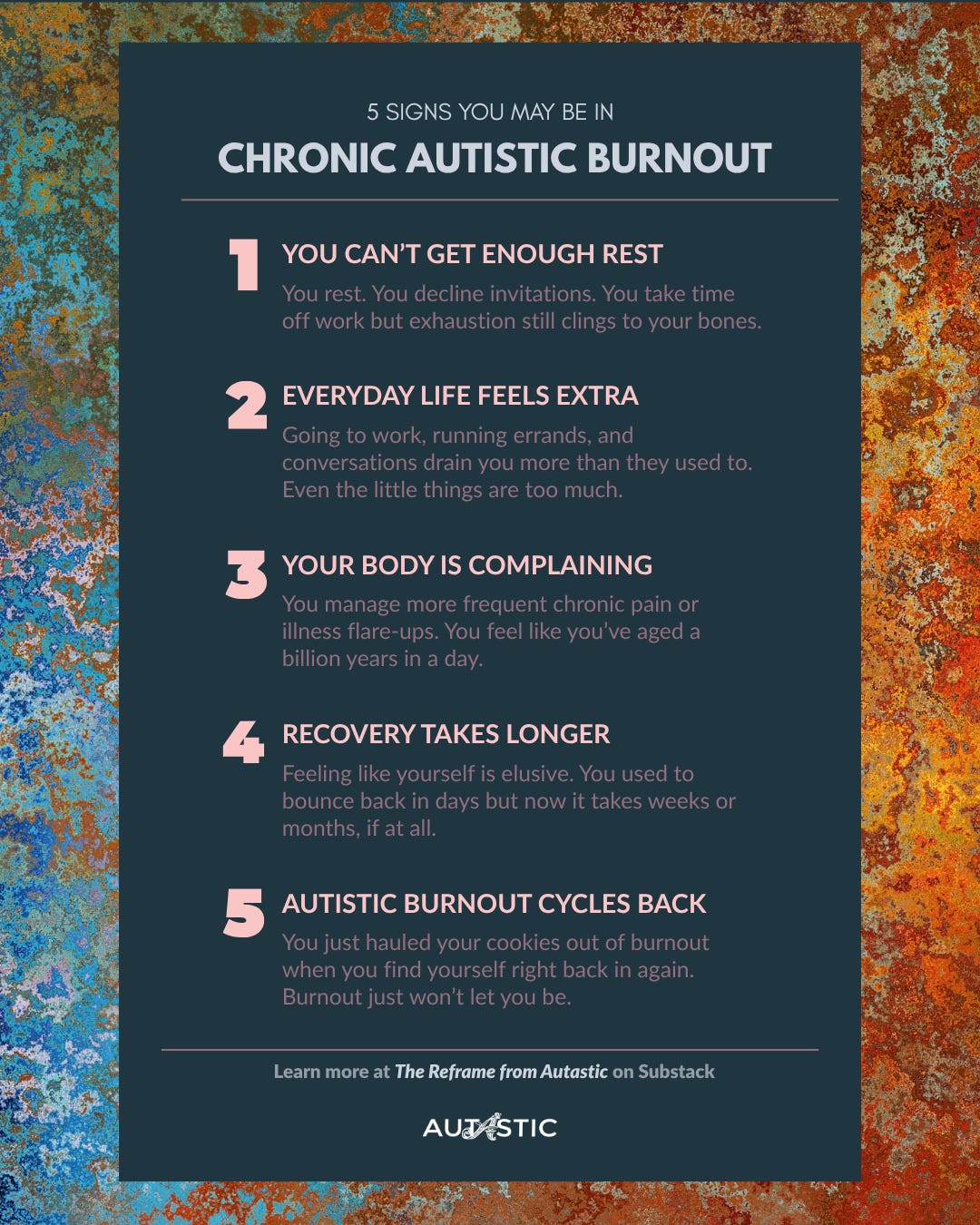
Over the past decade or so of conversations with Autastic community members, research for my manuscript, and ongoing self-observation, I’ve picked up a thing or two about autistic bodies. I’ve distilled this embodied wisdom to share with you.
One of the key concepts I’ve found to be true is that our systems are consistently pushed into overdrive in order to meet the demands of our systemically ableist world. That appears to be a constant across regions and cultures.
Let’s start to reclaim our lives, shall we?
🤿 Want a deeper dive? Look for this scuba emoji. Feel free to skip these bits otherwise.
To Begin, Here’s Your North Star
🌟 Do less. Rest more.
That’s it. True, the concept is deceptively simple. In practice though, if we could do this, we would. We do our best to honor the requirements of daily life, our responsibilities, and our safety needs yet we are pushed into overload and burnout repeatedly.
The world we’ve been raised in and live in as adults has taught us unsustainable ways of existing. You heard me—the way you live today is very likely inherently harmful to autistic bodies, minds, and spirits.
This is not blame. This is release.
Knowledge Is Power
More clearly seeing the forces exerted on us each day, means giving ourselves the power to choose how we want to live.
Where you are able to make change, empower yourself to choose what you need.
Where you are unable to make change, empower yourself to choose how you’ll navigate it instead.
One starting point is to better understand our rhythms and capacity so we might enjoy healthier equilibrium between activity and rest.
Activity 1 • Track Your Rhythms

Balance comes from knowing where you’re overtaxed. Try these observations to better know yourself:
Assess your personal energy expenditures.
Over a day, week, and/or month—however long you’re able to observe—take a clear-eyed look at your daily life. How many tasks are on your to-do lists? Do you ever get “caught up” or do you feel perpetually behind? Where is your energy spent? Keep notes. Everything counts.Assess your capacity.
Use a 5-point scale where 1 = I can do everything and 5 = I’m utterly spent. Track your experiences before and after you engage in physical, emotional, and cognitive activities. Keep notes. Get acquainted with your rhythms.
Activity 2 • Restorative Experimentation
You live the way you do because, through costly trial and error, you’ve found a way that works…mostly. At the same time, you’re here because you’re tired and need a way forward.
Tinkering with your routines and plans can chafe against your hard-won knowledge so consider the following an experiment. You can always go right back to your comfort zone at any time.
Adjust your restorative time.
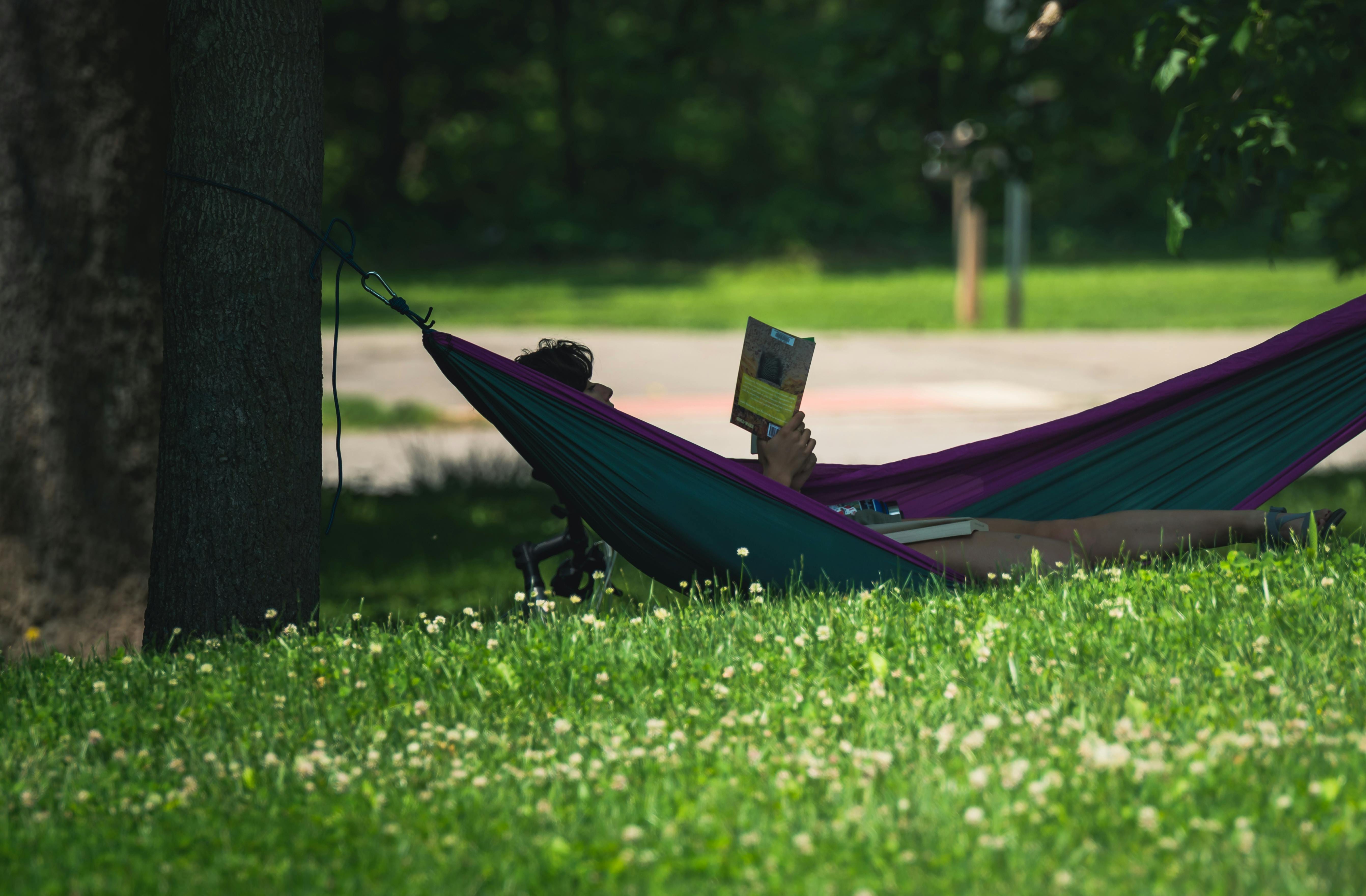
Start with 10 minutes today. Can you set a timer, put everything down, and just be? Do some cloudspotting. Zone out with a warm beverage. Let everything go loose and see how that is.
Add 5 minutes every other day to see how that is. Mix in activities you enjoy such as taking a walk, listening to a favorite playlist, swinging in the park, or gardening. Keep notes on your experiences to better acclimatize yourself to restoration time. Responsibilities are real. So is your health. Fill your reserves.
💬 Share the activities you tried in the comments👇🏽. Your experiments might just spark ideas for someone else’s restorative time. #PayItForward
Activity 3 • Reduce Your Allostatic Load
The effects of chronic stress are called allostatic load. This “wear and tear” accumulates right alongside time’s effects on our bodies, minds, and spirits.
Build new protective habits into your routines and your body will thank you. Give the following a try. Over time, see what demands on you fall away.
Take a preemptive bite out of sensory overload.
Try wearing protective gear such as sunglasses, earplugs, noise-cancelling headphones, tagless clothing, compression clothing, etc. Don’t wait until you feel the strain of sensory overload. Get that gear on in advance to preserve your energy for use on something enjoyable.Get creative with resourcing.
Reduce your stress load by recruiting help. If it’s available to you, ask your family, friends, and community for in-person support. Participate in mutual aid initiatives (such as our Autastic Community #MutualAid project). Make use of institutional supports where they exist and where it is safe to do so such as booking airport disability services. Every single moment you expend less effort counts.Offload anything and everything.
If you can not do a thing, don’t. Either delegate the task or get right with it not getting done at all. Something’s gotta give and eventually, that something will be your health. Unfortunately, that’s proven and guaranteed. Beat the stats by reducing demands and putting your long-term health first.
💬 Start small: What’s one demand you can set down today?
Activity 4 • Befriend Your Autonomic Nervous System
One of the things I’ve personally learned to do is to use my fitness tracker to track heart rate variability (HRV). Athletes use HRV as a measure of conditioning and readiness for training. We can use the same indicators for our everyday lives.
🤿 Tracking HRV allows you to befriend your autonomic nervous system over time. Decreasing time spent in sympathetic activation and increasing time spent in parasympathetic activation is a solid path towards healthy balance.

🤿 HRV tracking requires wearable tech such as a smartwatch or ring. This is clearly not accessible to all (the disability tax is real, fam). Options: Look for refurbished or resale devices. Barter your time and talents through mutual aid. Scour online marketplaces for free devices. With due diligence, ask your physician or local university to recommend studies where smart wearables are provided. Ask online for donated devices. Safety first as you go get yours.
Put on your gear and get tracking!
All there is to this activity is observing your personal patterns over time then leaning into whatever boosts your HRV—usually that’s ample restorative activity.
When you wake up in the morning, what’s your reading? After exerting yourself through work or conversation or exercise or shopping, what’s your reading? Later that night and then the next morning, check again because when we exert ourselves, it takes time for the HRV readings to catch up and it takes time for our bodies to recover. Get familiar with your pattern.
The key point to remember is that autistic HRV is generally lower than average HRV1, likely due to the relentless stress we’re under. Practically, that means you’ll need to find your own baseline average HRV over time then interpret the readings from there.
🤿 I’ve tested way too many HRV monitors over many years. I’ve found StressWatch (for Apple Watch only) to be one that is not only adorable, it’s simple and, most important, takes your personal baseline into account rather than rating you against an allistic average. The free version has everything needed. Other wearables also have HRV monitors so look for one that you’ll actually use rather than looking for “the best”.
The Wrap Up
🌟 Remember your North Star: Do less. Rest more.
Like you, I’m all too aware that our routines are links in a survival chain. The chain keeps growing longer and longer—more years add more tasks. Practicing balance preserves future capacity by gradually downshifting. Replace links in the chain with restorative activities instead of adding costly tasks until you collapse.
If you’re trying to emerge from autistic burnout yet again, try these activities over the coming months. Be easy with your efforts.
Yes, it’s unfair that we are once again responsible for keeping harm at bay. But you’ve already done harder things. You can definitely do this for future you.
💬 Want to offer or receive support as you reshape your rhythms? Need autistic BIPOC community? Come on over to Autastic 💪🏽💪🏾💪🏿

Migovich, Miroslava, et al. “Heart rate variability for stress detection with autistic young adults.” Lecture Notes in Computer Science, 2022, pp. 3–13, https://doi.org/10.1007/978-3-031-05887-5_1.